Credit: International Breastfeeding Journal MILC Director Dr. Meghan Azad, together with former MILC postdocs Dr. Sarah Reyes and Dr. Merilee Brockway, published Human milk composition and infant anthropometrics: overview of a systemic review with clinical and research implications in the International Breastfeeding Journal. In this overview of a large systematic review undertaken by the International Milk Composition (IMiC) Consortium, the authors emphasize the limited quality of evidence on the relationship between human milk composition and infant growth. They recommend future research should engage in more accurate data collection using standardized collection strategies, use assays that are validated for human milk, and consider approaches that approach human milk as a biological system rather than discrete individual components. (edited)
 Photo credit: Biomes, Dr. Ruairi Robertson MILC Director featured as Keynote Speaker at Baby Friendly Initiative Ontario Virtual Expo5/23/2024
 Keynote session by Dr. Meghan Azad. Credits: Baby-Friendly Initiative Ontario. MILC director Dr. Meghan Azad was the keynote speaker at the "Virtual BFI Expo 2024" hosted by Baby-Friendly Initiative Ontario and attended by healthcare professionals and parents. Her talk focused on Breast(milk) Feeding and Immune Development: Overview & Evidence from the CHILD Cohort. Read more about the event here.
 Dr. Meghan Azad in conversation with Maralee Caruso. Credit: CTV News MILC Director Dr. Meghan Azad was recently awarded the prestigious 2024 Canada Garidner Momentum Award and connected with several media outlets to discuss this exciting recognition of our breastmilk research. Read and watch the interviews: Globe and Mail, CTV Winnipeg, Winnipeg Free Press
 2024 Gairdner Awards recipients. Credit: Gairdner Foundation The 2024 Canada Gairdner Momentum Award is an initiative of The Gairdner Foundation, recognizing some of the world’s most significant biomedical and global health research and discoveries. Laureates are mid-career investigators recognized for exceptional scientific research contributions with continued potential for impact on human health. MILC Director Dr. Meghan Azad is a recipient this year "for research on understanding how human breast milk contributes to shaping the infant microbiome and lifelong health." The award recognizes more than a decade of collaborative research involving partners across Canada and around the world. A virtual announcement was held today, and a week of celebrations will be held later this year. Read more from UM Today or watch the profile video from the Gairdner Foundation.
On April 4, the new five-year Strategic Plan for the University of Manitoba was launched. Attendees at the launch party had the opportunity to engage with diverse research initiatives. The THRiVE Discovery Lab and MILC were invited to showcase our collaborative research platform. MILC member, Carol Dyck, as well as THRiVE students, Narges Khodabandehloo and Sarah Turner, hosted a booth to promote our research program and breastfeeding support initiatives to the wider UM community. For more information about the new strategic plan, please click here.
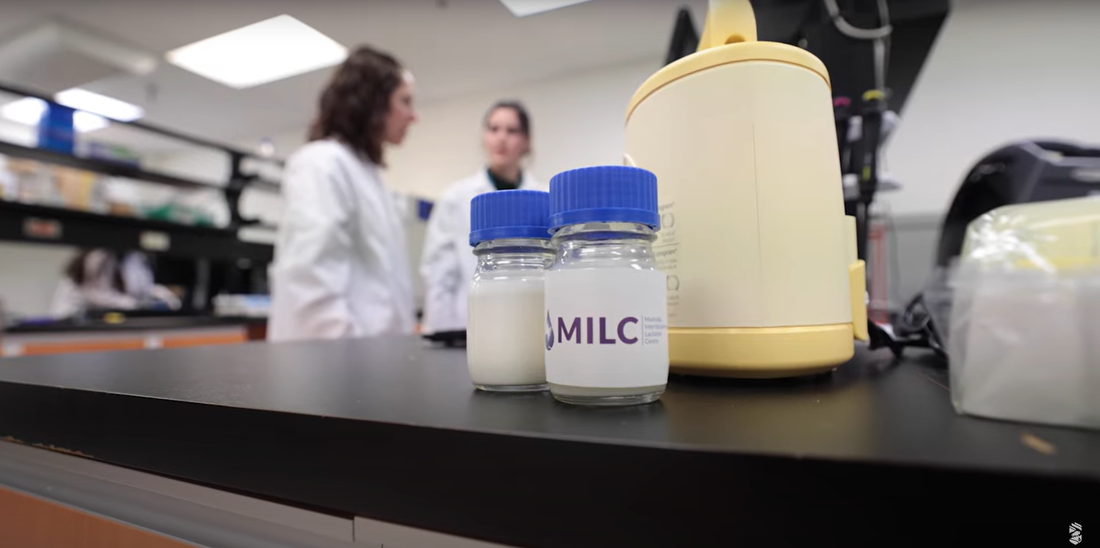 Meghan Azad and Kelsey Fehr in MILC biorepository. Credit: University of Manitoba MILC Co-Director, Meghan Azad, was featured on University of Manitoba Ask an Expert Series. Dr. Azad addressed the question "What are the Health Benefits of Breastfeeding" - not just for babies, but also for mothers, families and society as a whole. The video was filmed at the Manitoba Interdisciplinary Lactation Centre (MILC), a Biorepository and Research Centre located at the Children's Hospital Research Institute of Manitoba (CHRIM). Also featured in the video were MILC Research Associate Larisa Lotoski and Senior Data Analyst Kelsey Fehr. View the full video here.
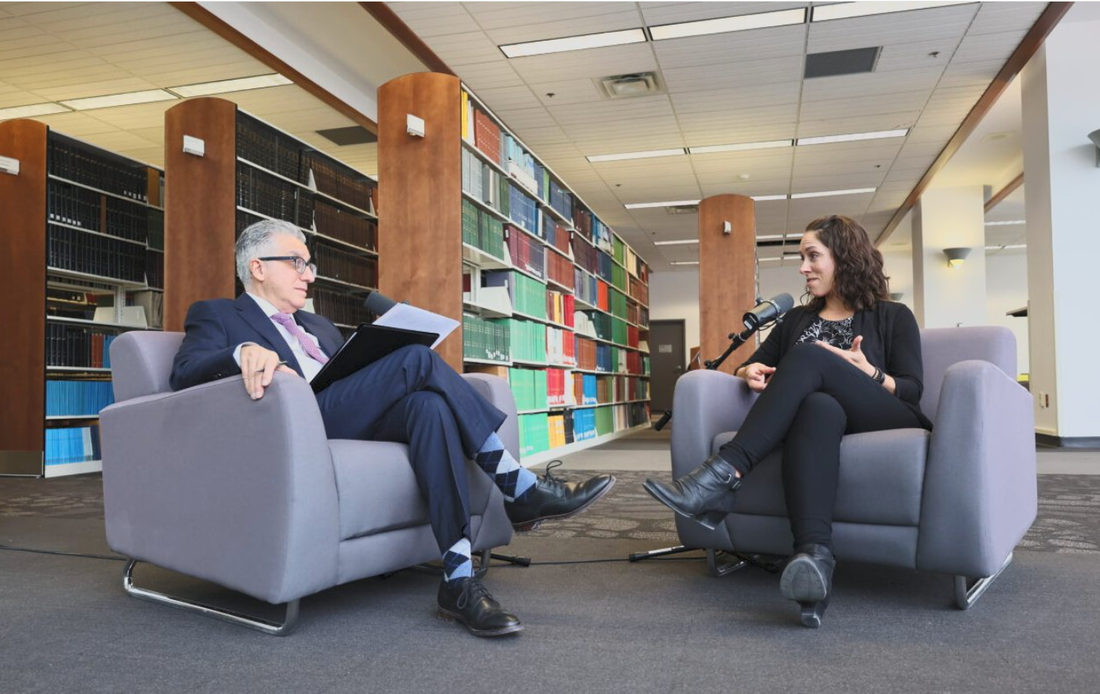 UM President Michael Benarroch in conversation with Meghan Azad. Credit: U Manitoba MILC Co-Director Dr. Meghan Azad was recently featured on Season 2 of "What's the Big Idea?", a podcast hosted by University of Manitoba President Michael Benarroch. The discussion focused on Dr. Azad's research about breastmilk and infant nutrition in Canada and globally, and how this impacts policy decisions and our understanding of human health. At the foundation of this research is the Manitoba Interdisciplinary Lactation Centre (MILC), a biorepository and research center storing more than 2000 breastmilk samples from mothers across the globe. Listen to full podcast here.
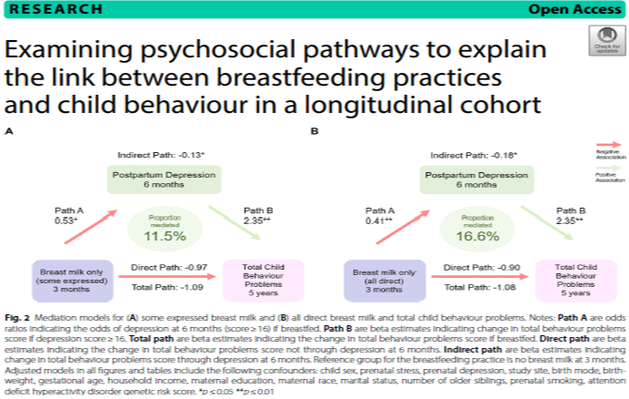 Mediation models linking breastfeeding, postpartum depression, and child behaviour. Credit: BMC Public Health MILC members published "Examining psychosocial pathways to explain the link between breastfeeding practices and child behavior in a longitudinal cohort" in BMC Public Health. The study found that multiple breastfeeding metrics (eg. expressed breastmilk feeding, exclusive breastfeeding and longer duration of breastfeeding) were related to less postpartum depression and better parent child relationships, which in turn were linked with fewer child behaviour problems. When looking at all the data together, both postpartum depression and the parent-child relationship helped to explain (mediate) the link between breastfeeding and child behaviour. These findings suggest that efforts to support breastfeeding in any form (including expressed breast milk feeding), supporting parental mental health, and encouraging strong parent-child relationships could all have positive effects on child behavioural development. The study was led by MILC PhD candidate Sarah Turner together with MILC co-director, Dr. Meghan Azad. Read the full article here [PDF] and check out Sarah's [Tweetorial] on X.
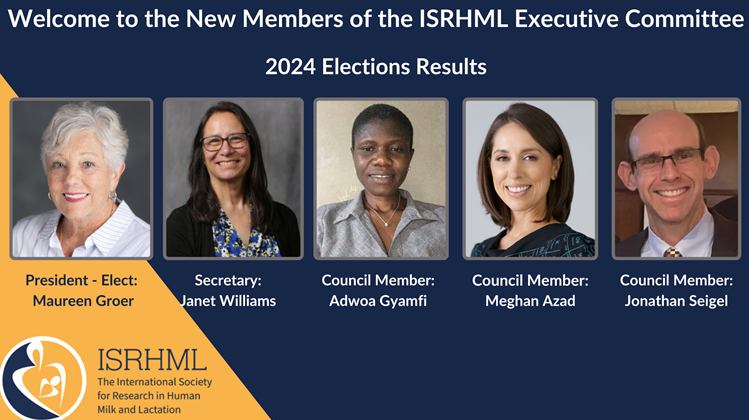 ISRHML Executive Committee. Credit: ISRHML Congratulations to MILC Lab co-director, Dr. Meghan Azad, for being elected to the Executive Council of the International Society for Research in Human Milk and Lactation (ISRHML) for a three year term. Dr. Azad brings a decade of experience in Human Milk research with expertise in Pediatrics, Nutritional and Immunological Sciences, and will support the committee in their collective and collaborative approach to achieve ISRHML's goals. More about the ISRHML can be found here.
|